A Breath Chemist's Blunt Take: If Your Partner Stopped Kissing You, the Smell Isn't From Your Tongue, It's Rising From Under Your Gums, and Here's How to Stop It Without Surgery.

I Study the Chemistry of Breath
My field is narrow and strange. I study the actual chemical compounds that make breath smell, and where in the mouth they come from.
And the people who end up in front of me are usually heartbroken, not just self-conscious. A partner who stopped kissing them. A spouse who turns away.
They have tried everything the shelf offers. Tongue scrapers, mints, mouthwash on a loop.
And the smell always comes back, because they have been treating the wrong place.
The cruelest part is how hard they try. People scrub and gargle for years, never knowing the source was somewhere a toothbrush can't reach.
Where the Smell Actually Comes From
The worst, most persistent breath does not come from the surface of your tongue or last night's dinner.
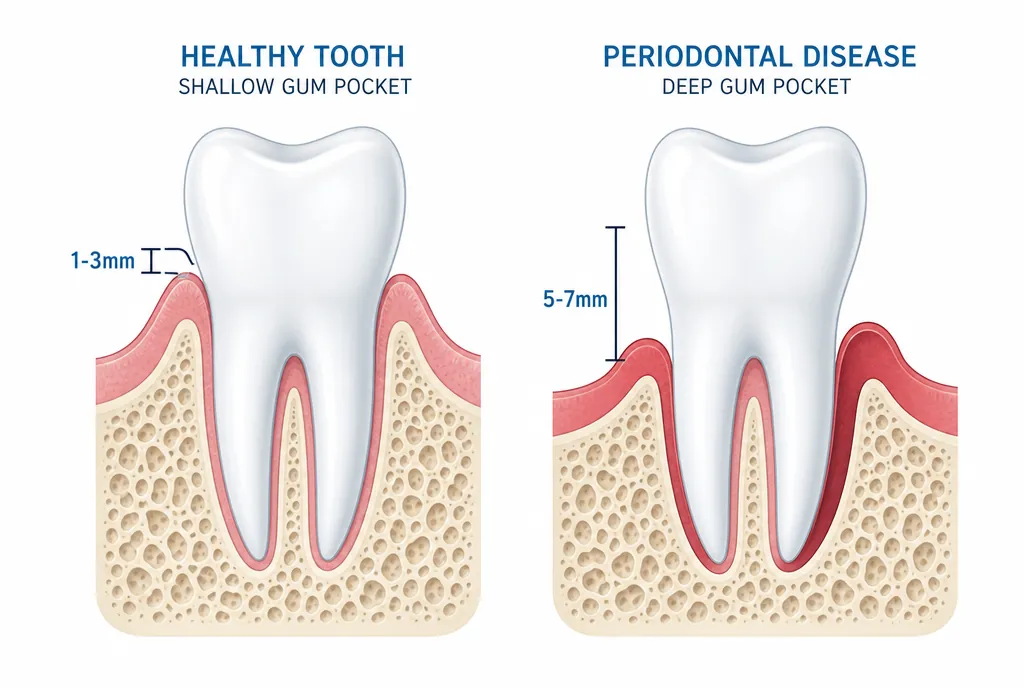
It rises from deep pockets that form between your teeth and gums, where bacteria sit below the gumline and release sulfur compounds. That is the rotten, sour smell people describe.
You cannot brush it out. You cannot rinse it away. The source is too deep for any of it to reach.
What's Creating Those Pockets
So why do the pockets form in the first place? It comes back to the bone around your teeth.
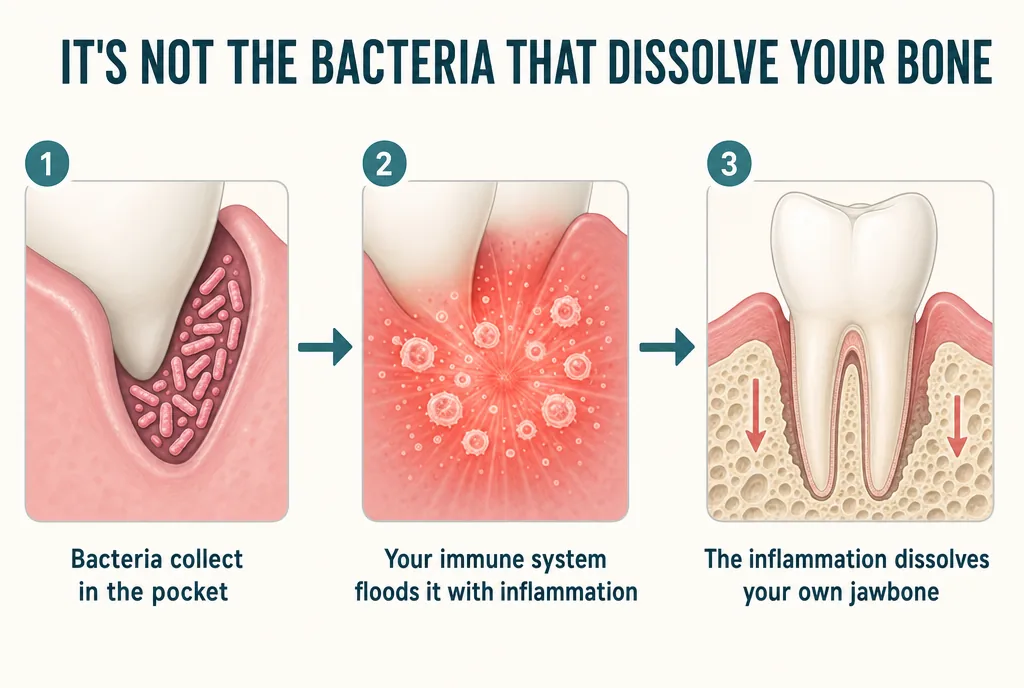
Most people assume bacteria dissolve that bone. They do not. Bacteria cannot do that.
What they do is trigger your immune system, which floods the area with inflammation. That inflammation switches on the cells that dissolve your own bone, and aims them at your jaw.
Picture a fire crew that hoses a burning house, then never shuts the water off, until it collapses from the water, not the fire. That is the process deepening the pockets your breath is rising from.
The deeper the pocket, the worse the smell, and the less any surface product can ever do about it.
Why Mints and Mouthwash Always Fail
This is why every surface fix is temporary. A mint or a mouthwash masks the smell on top for an hour, then it returns.
Even a deep cleaning scrapes the bacteria off the root, which helps for a few weeks, then they move right back in, and the inflammation feeding the pockets was never touched.
So the smell keeps coming back, and the person keeps leaning away.
The Two Things That Actually Stop It
To actually end the smell at its source, two things have to reach the bottom of the pocket at the same time.
Good bacteria, to crowd out the sulfur-producing ones so they cannot keep returning.
And something to calm the immune overreaction that keeps the pockets deep and inflamed.
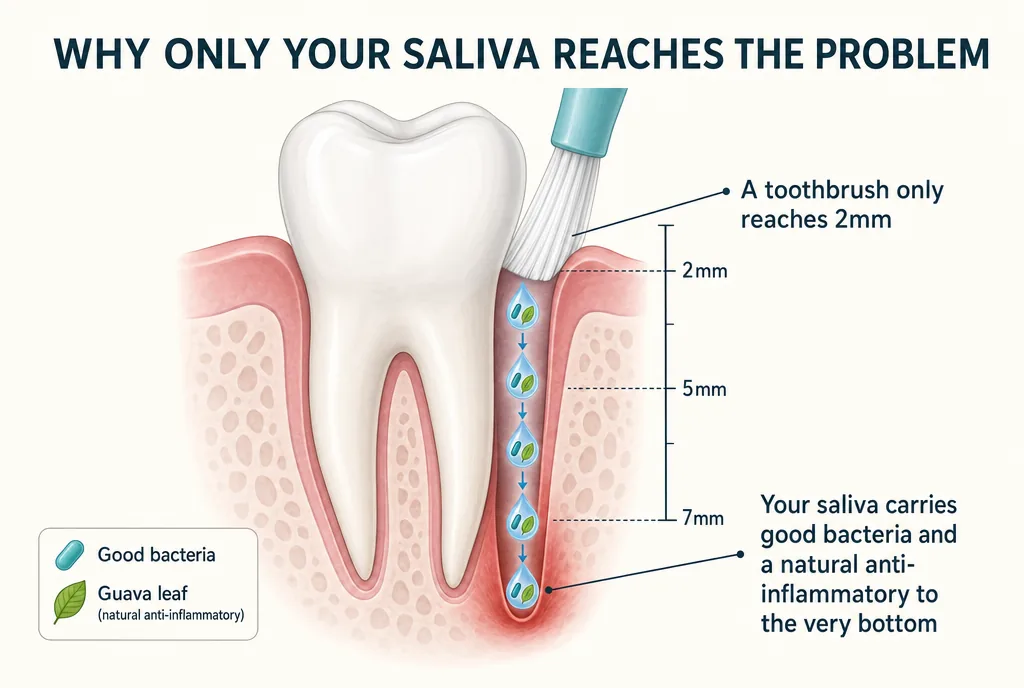
Here is the obstacle. Your toothbrush reaches about 2mm under the gumline. These pockets are 4, 5, 6mm deep. Floss cannot reach the bottom. Neither can any rinse.
But one thing in your body reaches the base of every pocket, every single day. Your saliva, each time you chew and swallow.
Using Your Own Saliva as the Delivery System
So the answer was never to mask it from the top. It is to load your saliva with those two things and let your body carry them to the bottom of every pocket for you.
Automatically. Every day. To the exact place the smell is rising from.
It is the one approach I have seen address persistent breath at its actual source.
Stop covering the smell at the surface. Deliver the fix to the bottom of the pocket, where it actually starts.
What I Tell the Ones Afraid to Get Close
The product I point them to is called Sulcara. It is not a pill you swallow and not a rinse you spit.
It is a chewable you dissolve after a meal, so it mixes into your saliva and rides down into every pocket.
It carries three strains of beneficial bacteria to crowd out the odor-causing ones, plus a concentrated guava extract that calms the inflammation keeping the pockets deep. Chewing floods your mouth with saliva, and your saliva does the delivery.
It costs about $0.88 a day. No surgery, just a daily chewable.
- Buy 2, Get 1 Free: a full 90-day protocol for $79
- About $0.88 a day, less than a month of mints and mouthwash that never worked
- Non-surgical, a daily chewable, not a procedure
- 90-day money-back guarantee, and fewer than 1 in 100 people ever ask for it
- Made in the USA in a GMP-certified, FDA-registered facility
- No subscription unless you choose one
See if Sulcara is still in stock and start the non-surgical protocol here →
"My husband had quietly stopped kissing me and I was devastated when I realized why. Mints and mouthwash did nothing. A few weeks on this and the sour taste when I floss is gone, and so is the distance between us."

— Lauren P., Verified Purchase
"I'd been single and terrified to get close to anyone because of my breath. I'd tried everything. This is the first thing that worked, because it's actually treating my gums, not covering the smell. Life changing is not too strong a word."

— Kevin M., Verified Purchase
"I'd wasted money on swallowed probiotics that did nothing for my breath. You chew this and it coats the gumline. Three months in, no more smell when I floss and my gums stopped bleeding."

— Anita S., Verified Purchase
These live cultures are made in small batches. When this run sells out, the next takes weeks to grow.